

Table of Contents
- The Foundation: What Makes Pokemon Cards Special
- Smart Shopping: Making Your First Investment Count
- Mastering the Fundamentals: How Battles Actually Work
- Deck Construction: Building Your Perfect Team
- Navigating Competitive Formats
- Building Connections: The Social Side of Pokemon
- Investment Strategies: Protecting Your Collection
- Advanced Concepts: Elevating Your Game
- Conclusion: Your Pokemon Journey Begins Now
Diving into the Pokemon Trading Card Game might seem daunting at first glance, but thousands of players worldwide have discovered the incredible excitement this hobby brings. Since launching in Japan during the late 1990s, Pokemon TCG has evolved into a global phenomenon combining strategic gameplay, artistic appreciation, and social interaction.
The Foundation: What Makes Pokemon Cards Special
Pokemon cards aren't just pieces of cardboard—they're gateways to adventure. Each card tells a story through vibrant illustrations while serving specific gameplay functions. Understanding this dual nature helps newcomers appreciate why millions of collectors and players remain passionate about the hobby.
The card ecosystem operates on three primary categories. Pokemon serve as your battling companions, each possessing unique attacks, HP values, and special abilities. Energy cards fuel these creatures' powerful moves, with different types like Fire, Water, and Electric creating strategic depth. Trainer cards act as your toolkit, offering everything from healing potions to powerful search effects that can turn battles around.
Rarity indicators help players navigate the complex world of card values. Circle symbols mark common cards, diamonds indicate uncommon finds, and stars represent the coveted rare cards that often feature holographic foil. Special rarities like GX, EX, and VMAX cards showcase premium artwork alongside game-changing abilities.
Smart Shopping: Making Your First Investment Count
Walking into a card shop can overwhelm beginners with countless product options. Battle Academy represents the perfect starting point, featuring simplified rules and everything needed for immediate play. This product teaches fundamentals without the complexity that intimidates newcomers.
Elite Trainer Boxes provide comprehensive value for emerging players. These products include booster packs, energy cards, dice, and storage solutions in one convenient package. The included player's guide explains advanced concepts while booster packs offer the thrill of discovering rare cards.
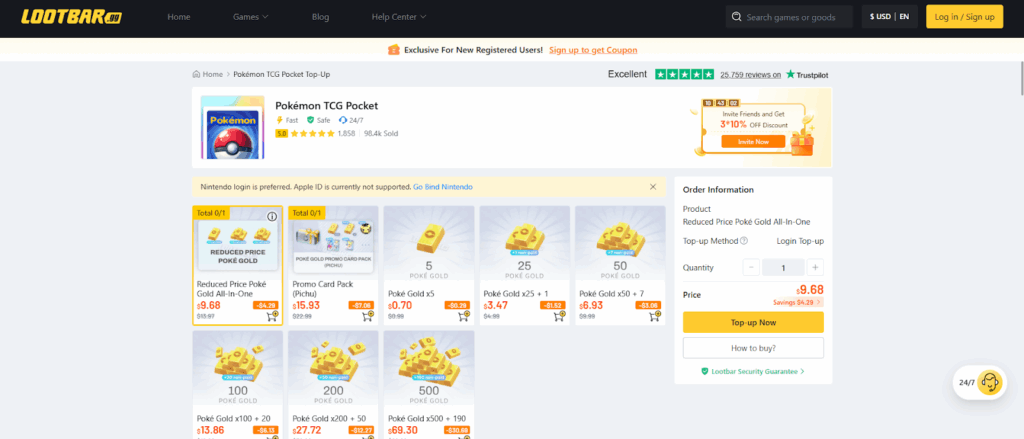
Single card purchases often provide better value than random booster packs for competitive players. Knowing exactly which cards you need prevents wasteful spending on unnecessary duplicates. Established platforms help players buy poke gold and premium singles efficiently, ensuring collections grow strategically rather than randomly.
For serious collectors seeking rare cards and competitive staples, LootBar offers streamlined access to verified authentic cards. This approach eliminates guesswork while providing transparent pricing on sought-after singles.
Mastering the Fundamentals: How Battles Actually Work
Pokemon battles follow an elegant turn structure that becomes second nature with practice. Games begin with each player drawing seven cards and placing one Basic Pokemon in the Active position. This creature becomes your primary fighter while up to five additional Pokemon wait on your Bench.
Turn sequence follows a logical pattern. Players draw one card, may play Trainer cards for various effects, can attach one Energy card to their Pokemon, and may attack if sufficient energy is attached. This rhythm creates strategic decision points throughout each game.
Victory conditions offer multiple paths to success. Claiming all six Prize cards by defeating opponent Pokemon represents the most common win condition. However, games also end when opponents cannot draw their opening card or run out of Pokemon in play.
Damage calculation involves straightforward mathematics, but type effectiveness adds strategic layers. Fire-type attacks deal extra damage to Grass Pokemon while proving less effective against Water types. Memorizing these interactions helps players make optimal tactical decisions.
Deck Construction: Building Your Perfect Team
Successful deck building requires understanding Pokemon evolution lines and energy requirements. Most competitive decks focus on one or two main Pokemon families, supported by consistent Trainer cards that provide draw power and utility effects. This focused approach increases the likelihood of executing your game plan.
The 60-card deck limit forces difficult decisions about card inclusion. Experienced players recommend starting with proven deck lists before experimenting with personal modifications. Online resources provide tournament-winning decklists that teach effective ratios and card choices.
Consistency represents the hallmark of competitive decks. Including multiple copies of essential Pokemon and key Trainer cards ensures access to crucial game pieces. Four-of limits on individual cards encourage diversity while maintaining strategic focus.
Playtesting reveals deck weaknesses and strengths through actual gameplay experience. Local game stores often provide casual play opportunities where beginners can test strategies against various opponents without tournament pressure.
Standard format creates the primary competitive environment using only recent card sets. This rotating format ensures fresh gameplay experiences while keeping entry costs manageable for new players. Most organized play events use Standard format rules.
Expanded format incorporates a broader card pool, allowing creative deck combinations using older cards. This format appeals to experienced players who enjoy exploring unique strategies unavailable in Standard play. However, the increased complexity can overwhelm newcomers.
Limited formats like Sealed and Draft provide equal playing fields where skill matters more than collection size. These events distribute identical card pools to all participants, making them ideal for players still building collections. Draft events also teach valuable card evaluation skills.
Theme Deck format uses only pre-constructed products, creating accessible competitive environments for beginners. Many stores host Theme Deck tournaments that welcome newcomers while providing prizes and social interaction.
Building Connections: The Social Side of Pokemon
Local game stores serve as community centers where friendships form over shared cardboard battles. These venues typically host weekly events ranging from casual Pokemon League meetings to competitive tournaments. Store staff often possess encyclopedic knowledge and genuinely enjoy helping newcomers learn.
The Pokemon Professor program trains knowledgeable volunteers who teach rules and organize events. These certified judges ensure fair play while creating welcoming environments for players of all skill levels. Many Professors remember their own beginner days and offer patient guidance.
Online communities extend beyond physical locations through forums, Discord servers, and streaming platforms. These digital spaces provide deck advice, tournament coverage, and strategy discussions that supplement local play opportunities.
Tournament culture emphasizes sportsmanship and mutual respect. Even during intense competitive matches, players typically maintain friendly attitudes and help opponents understand complex interactions. This welcoming atmosphere encourages continued participation.
Investment Strategies: Protecting Your Collection
Pokemon cards can appreciate significantly over time, making collection management important for long-term value preservation. Proper storage using penny sleeves, toploader protectors, and climate-controlled environments prevents damage that destroys card value.
Market trends affect card prices through supply and demand dynamics. Newly released cards often start high before settling at stable prices. Conversely, rotating cards may lose competitive value while maintaining collector appeal. Understanding these patterns helps inform purchasing decisions.
Grading services evaluate card condition and authenticity, potentially increasing values for exceptional specimens. Professional grading makes sense for valuable vintage cards or perfect condition modern rarities. However, grading costs must be weighed against potential value increases.
For players focused on competitive success rather than collecting, services offering reliable access to tournament staples provide excellent value. When you need to buy poke gold or premium cards quickly, established marketplaces eliminate hunting through multiple sources while ensuring authenticity.
Advanced Concepts: Elevating Your Game
Energy acceleration represents a fundamental competitive concept involving powering up Pokemon faster than normal attachment rates. Special cards enable multiple energy attachments per turn, creating devastating attack combinations that can overwhelm opponents.
Card advantage theory explains why some players consistently outperform others with similar card pools. Drawing extra cards, searching for specific pieces, and maximizing each turn's efficiency separate skilled players from casual participants.
Metagame analysis involves understanding popular strategies and preparing counters accordingly. Successful competitive players study tournament results to identify trends and adapt their decks for expected matchups.
Sideboard strategies in best-of-three formats allow players to customize decks between games. This advanced technique requires deep format knowledge and careful preparation but provides significant competitive advantages.
Conclusion: Your Pokemon Journey Begins Now
Pokemon Trading Card Game offers incredible depth beneath its approachable surface. Whether drawn by competitive ambitions, artistic appreciation, or nostalgic connections, this hobby provides lasting entertainment and meaningful social connections.
Starting with structured products like Battle Academy or Elite Trainer Boxes provides solid foundations for future growth. Local game stores offer welcoming communities where beginners can learn from experienced players while participating in organized events.